Posted on

The Importance of Spill Kits

The Importance of Spill Kits

 The Purpose of Spill Kits

Any business involved in handling, manufacturing or distributing hazardous materials or liquids must have a spill kit on-site to ensure a quick reaction in the event of an emergency. Working with said materials poses a significant risk of spills which could result in a fire or cause damage to nearby employees or the environment. It is vital that hazardous liquids are handled with care and reactive procedures, like on-site spill kits, are available for fast response.

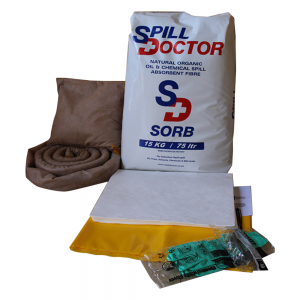
Spill kits are a combination of absorbent materials that work to clean and contain hazardous spills thoroughly. Spill kits vary depending on the liquids it is required to absorb and clean. It is an employer’s responsibility to protect the staff and the local environment. Working with hazardous materials can be dangerous and should not be taken lightly. It is important to prepare for any emergency that may occur by providing spill kits.

Benefits of Spill Kits

 Cost-effective Solution – Chemical or oil spills can be costly especially if it is not cleaned up immediately. Having a spill kit on site with all the necessary tools for a safe and effective clean-up allows employees to grab the relevant spill kit and react swiftly. The damage that a spill may cause is minimized when addressed immediately and allows workers to return to work much faster. The company will save a lot of money when work resumes as usual and hefty fines are avoided.

Effective Clean-up – Spill kits include all the necessary materials needed to clean up a spill effectively. It is important that the environment is cleaned to its original state. Without a spill kit on-site, spills won’t be contained or attended to fast enough which could result in irreversible damage to employees or the environment.

Safer Workplace – Employers and staff members can have peace of mind knowing that spill kits are ready and available in the event of an emergency spill. Working with dangerous liquids could be nerve-wracking, but having spill kits available throughout the premises could ease the minds of all employees.

Following Local Legislations – It is required by law to have safety measures in place to ensure the health and safety of employees and the environment are protected. Spill kits are a solution for quick and easy cleanup which will avoid further damage that may result in temporary closure, fines, or even imprisonment.

Who Needs Spill Kits?

Whatever your business may do or produce, if chemical and hazardous materials are used, a spill kit is required to be readily available at all times. Manufacturing, distributing, handling or storing chemical liquids and materials pose a serious risk of spills and would require spill kits to ensure there is always a cleanup system in place when a spill occurs.

Spill kits are an easy and affordable solution that can make the difference between detrimental damage and effective cleanup. It is important to familiarize yourself with the hazardous materials you work with and pick the right spill kit accordingly. Storing spill kits in an easily accessible location could also make for a swift and efficient cleanup.

If you would like more information on spill kits, email us at sales@spilldoctor.co.za or call us on 010 003 6060.
The importance of spill kits

Posted on

8 steps to follow for spill response

Spill Doctor South Africa logo

Accidents happen, plans or steps for spill response in place for when a spill in the workplace occurs keeps you safe.

These 8 steps for spill response, which can assist you when responding to a chemical, oil or hazardous spill.

STEP 1 – ASSESS

As soon as you encounter a spill – and until it has been successfully dealt with – you must constantly assess the risk it poses to personnel, the environment, and property. You should never tackle a spill on your own. Inform colleagues and wait for at least one other person before dealing with an incident. 

STEP 2 – PROTECT

Always wear the appropriate personal protective equipment (PPE) to allow you to safely respond to the spill. Check the safety data sheet for any hazards associated with the liquid spilled and then dress accordingly. If in doubt, assume the worst and wear the highest level of PPE. For rapid response, the location of spill containment equipment should also be marked on a readily available site plan. An inventory of on-site chemicals will help responders to understand what they are dealing with. 

STEP 3 – CONTAIN

Following a spill, containment is crucial. It buys time and reduces the area of contamination, thereby lessening the spill’s impact. Use absorbent socks and booms or physical barriers to provide fast, effective containment. It is always better to try to keep any hazardous spill on the surface, so spill kits should be located next to storage areas, with sealing products positioned next to site drains.

STEP 4 – STOP THE SPILL

Once the spill has been contained, you need to stop its source, whether that involves rolling a drum damaged side up, turning off a tap, or plugging the hole in a container. If appropriate, decant any remaining liquid into a secondary container. Remember: never step in the spill.

STEP 5 – REASSESS

After the spill has been contained and the source controlled, reassess the entire situation before starting the clean-up. Ensure that the spill is fully under control.

STEP 6 – CLEAN-UP

This can be as simple as wiping up with sorbent pads, through to using additional sorbents and/or a compatible “wet vac”. Remember to treat contaminated material with the same caution as the spilled liquid itself and dispose of it accordingly.

STEP 7 – DECONTAMINATION

Ensure all personnel involved with the spill are fully decontaminated; at the spill site, all PPE and equipment must also be fully decontaminated and checked. If items have been damaged or cannot be fully decontaminated, dispose of them accordingly and replace them with new ones.

STEP 8 – REPORT AND REPLENISH

Debrief all personnel involved, compile a complete report of the incident, and fill out all associated paperwork. If need be, change your procedures and/or the location of some or all of your spill response equipment. Remember to replenish/restock all front-line equipment and backup stocks, such as PPE and drain covers. Learn from the experience; you will be better prepared should there be a next time. Staff training is paramount: they need to be familiar with the layout of the site, the equipment they will be using, and how to use it safely and effectively. Hopefully, any incident will be a rare occurrence and the only time your staff will need to respond to a spill is during regular refresher training. This training should be programmed in as a matter of course, just like any other training, such as first aid or fire extinguisher use.

You can view our range of spill kits (here).

Spill Doctor’s mission is to assist companies in creating safe and complaint workplaces by providing a range of environmental and health and safety products.


Posted on

Replenishment Spill Kit

Spill Doctor South Africa logo

Spill Doctor offers replenishment spill kits!

Replenishment kits provide you with a way to more economically stay prepared, by offering a replenishment of items in a spill kit that run out or are ‘single spill use’.

We advise that a replenishment kit be kept on site at all times, in addition to your main spill kit so you are never caught in a situation where you cannot manage a spill due to lack of supplies.

Our replenishment spill kit’s are packed with absorbents and P.P.E to help you respond quickly and effectively to a spill. 

For further details about the items in a replenishment kit, you can view our replen kits (here), or contact our sales team, who will be happy to assist you.

130L oil replenishment spill kit


Posted on

SPILL KITS – HOW DO I CHOOSE THE RIGHT KIT?

130L Oil Spill Kit

Spill Doctor South Africa logo

SPILL  KITS – HOW DO I CHOOSE THE RIGHT KIT?

Before you can choose the correct type, size, and quantity of spill kits – there are some basic questions you must have the answers to.

  • What types of liquids are there?
  • What quantities and sizes of containers are there?
  • Where are the “high-risk” or “spill prone” areas?
  • Will the spill be indoors or outdoors?
  • Are there are any surface water drains or risk of ground contamination.
  • Do the Spill Kits need to be mobile, is there access to the spill area?
  • What if you have more than one spill in a day, is there enough absorbent material?


CONTACT OUR SALES TEAM WHO WILL BE HAPPY TO ASSIST YOU IN MAKING THE BEST CHOICE FOR YOUR NEEDS.

130L Oil Spill Kit
130L Spill Kit designed for hydrocarbon spills.