Posted on

10 Questions you need to ask yourself before buying a Steel Store?

10 questions to ask yourself before buying a steel store

Spill Doctor South Africa logo

10 Questions to ask yourself before buying a non-combustible steel store:


  • What liquids are you looking to store?
  • How many litres of each liquid do you want to store?
  • What size and number of drums and IBC’s will require storage?
  • Are the products to be stored indoors or outdoors?
  • If indoors, are there any access issues or internal drainage systems?
  • If outdoors, are there surface water drains or a water course in the vicinity?
  • How will the containers be delivered to site?
  • How will they be placed in and removed from the storage unit?
  • Is there a requirement to store any of the liquids separately?
  • Is there a fire, explosion, or vapour release risk associated with any of the liquids?

BENEFITS OF NON-COMBUSTIBLE STORES

Can be relocated within your premises or to new premises (as required)
No building plans required
Can be up and running within 6-8 weeks
Protection of investment (20 year workmanship guarantee)

FEATURES OF NON-COMBUSTIBLE STORES

Fully seam welded sump
Galvanised, removable grid above sump area
Hight varied vents for natural ventilation
Robust steel frames with 2mm panels welded on
-Hinged or sliding doors

OPTIONAL ADDONS
Heating or cooling

-Pushback system
-Sprinkler system
-Zone 1 lighting

If you would like additional information you can view our non-combustible steel stores or get in touch with our sales team.


Posted on

Flammable Safety Cabinets

Don't chance a fire
Spill Doctor South Africa logo

Improper handling & storage

Flammable and combustible liquids remain the leading causes of industrial fires. Safety cabinets substantially reduce that risk, and as a result, protect your people, business, and the environment.

Why you need a Safety cabinet

  • Keep dangerous liquids safely organised and segregated.
  • Ensures time for safe evacuation in the event of a fire.
  • Provide compliance with OSH Act regulations and local bylaws.
  • Improves awareness with high visibility cabinet colour and prominent labelling.
  • Easy and efficient locating of materials.
  • Improved security due to a locking mechanism.


You can view our range of Safety Cabinets (here).

Posted on

The Difference Between Flammable & Combustible Liquids

Flammable and Combustible liquid signage.

What is the difference between flammable and combustible liquids?

Flammable and combustible liquids are liquids that can burn. They are classified, or grouped, as either flammable or combustible by their flashpoints. Generally speaking, flammable liquids will ignite (catch on fire) and burn easily at normal working temperatures. Combustible liquids have the ability to burn at temperatures that are usually above working temperatures.

There are several specific technical criteria and test methods for identifying flammable and combustible liquids. Under the Workplace Hazardous Materials Information System (WHMIS), flammable liquids have a flashpoint below 37.8°C (100°F). Combustible liquids have a flashpoint at or above 37.8°C (100°F) and below 93.3°C (200°F).

Flammable and combustible liquids are present in almost every workplace. Fuels and many common products like solvents, thinners, cleaners, adhesives, paints, waxes and polishes may be flammable or combustible liquids. Everyone who works with these liquids must be aware of their hazards and how to work safely with them.

What is a flashpoint?

The flashpoint of a liquid is the lowest temperature at which the liquid gives off enough vapour to be ignited (start burning) at the surface of the liquid. Sometimes more than one flashpoint is reported for a chemical. Since testing methods and purity of the liquid tested may vary, flashpoints are intended to be used as guides only, not as fine lines between safe and unsafe.

Does the liquid itself burn?

Flammable and combustible liquids themselves do not burn. It is the mixture of their vapours and air that burns. Gasoline, with a flashpoint of -40°C (-40°F), is a flammable liquid. Even at temperatures as low as -40°C (-40°F), it gives off enough vapour to form a burnable mixture in air. Phenol is a combustible liquid. It has a flashpoint of 79°C (175°F), so it must be heated above that temperature before it can be ignited in air.

What are flammable and explosive limits?

A material’s flammable or explosive limits also relate to its fire and explosion hazards. These limits give the range between the lowest and highest concentrations of vapour in air that will burn or explode.

The lower flammable limit or lower explosive limit (LFL or LEL) of gasoline is 1.4 percent; the upper flammable limit or upper explosive limit (UFL or UEL) is 7.6 percent. This means that gasoline can be ignited when it is in the air at levels between 1.4 and 7.6 percent. A concentration of gasoline vapour in air below 1.4 percent is too “lean” to burn. Gasoline vapour levels above 7.6 percent are too “rich” to burn. Flammable limits, like flashpoints however, are intended as guides not as fine lines between safe and unsafe.

What is an Autoignition Temperature?

A material’s autoignition or ignition temperature is the temperature at which a material self-ignites without any obvious sources of ignition, such as a spark or flame.

Most common flammable and combustible liquids have autoignition temperatures in the range of 300°C (572°F) to 550°C (1022°F). Some have very low autoignition temperatures. For example, ethyl ether has an autoignition temperature of 160°C (356°F) and its vapours have been ignited by hot steam pipes. Serious accidents have resulted when solvent-evaporating ovens were heated to temperatures above the autoignition temperature of the solvents used. Autoignition temperatures, however, are intended as guides, not as fine lines between safe and unsafe. Use all precautions necessary.

How can flammable and combustible liquids be a fire or explosion hazard?

At normal room temperatures, flammable liquids can give off enough vapour to form burnable mixtures with air. As a result, they can be a serious fire hazard. Flammable liquid fires burn very fast. They also give off a lot of heat and often clouds of thick, black, toxic smoke.

Combustible liquids at temperatures above their flashpoint also release enough vapour to form burnable mixtures with air. Hot combustible liquids can be as serious a fire hazard as flammable liquids.

Spray mists of flammable and combustible liquids in air may burn at any temperature if an ignition source is present. The vapours of flammable and combustible liquids are usually invisible. They can be hard to detect unless special instruments are used.

Most flammable and combustible liquids flow easily. A small spill can cover a large area of workbench or floor. Burning liquids can flow under doors, down stairs and even into neighbouring buildings, spreading fire widely. Materials like wood, cardboard and cloth can easily absorb flammable and combustible liquids. Even after a spill has been cleaned up, a dangerous amount of liquid could still remain in surrounding materials or clothing, giving off hazardous vapours.

What is the danger of flashback?

Vapours can flow from open liquid containers. The vapours from nearly all flammable and combustible liquids are heavier than air. If ventilation is inadequate, these vapours can settle and collect in low areas like sumps, sewers, pits, trenches and basements. The vapour trail can spread far from the liquid. If this vapour trail contacts an ignition source, the fire produced can flash back (or travel back) to the liquid. Flashback and fire can happen even if the liquid giving off the vapour and the ignition source are hundreds of feet or several floors apart. That is why approved storage and dispensing equipment, such as safety cans, are extremely important. 

Can flammable or combustible liquids be hazardous to my body?

The most obvious harm would be the danger of a fire or explosion. After the immediate danger of a fire, there are sometimes other properties of these liquids that may be hazardous to the body. Flammable and combustible liquids can also cause health problems depending on the specific material and route of exposure (breathing the vapour/mist, eye or skin contact, or swallowing). Some flammable and combustible liquids are corrosive. Many undergo dangerous chemical reactions if they contact incompatible chemicals such as oxidizing materials, or if they are stored improperly.

The Material Safety Data Sheet and the supplier’s labels on the containers should tell you about all the hazards for the flammable and combustible liquids that you work with.

An example is 2-propanol (also known as: dimethylcarbinol, isopropanol, or isopropyl alcohol). It is a colourless liquid with a sharp odour like rubbing alcohol or resembling that of a mixture of ethanol and acetone. It is flammable liquid and vapour. Vapour is heavier than air and may spread long distances. Distant ignition and flashback are possible. It is also considered to be a mild central nervous system depressant. High vapour may cause headache, nausea, dizziness, drowsiness, incoordination, and confusion. It may also be irritating to the respiratory tract or eyes.

Posted on

The importance of emergency showers and eyewash stations.

Protecting your employees and abiding by the law.

Emergency showers and eyewash stations are an absolutely necessary backup to minimize the effects of accidental exposure to high-risk materials. The first 10 to 15 seconds after exposure to a hazardous substance, especially a corrosive substance, are critical and delaying treatment, even for a few seconds, may cause serious injury.

Accidental exposures to high-risk materials such as chemical, toxic, corrosive or similarly hazardous substances can and often occur even with good engineering controls and safety precautions in place as a result it is essential to look beyond the use of goggles, face shields, and procedures for using personal protective equipment.

Emergency showers and eyewash stations provide on-the-spot decontamination and allow workers to immediately flush away hazardous substances that can cause injury. They can also be used effectively in extinguishing clothing fires or for flushing contaminants off clothing.

OSH Act – General Safety Regulations (GSR) Section 3 clause 8 & 9 clearly state the requirement for Emergency Showers and Eyewash Stations:

(8)  Where an employee is exposed or can be exposed to a potential hazard of injury to the eye through contact with a biological or chemical substance, the employer concerned shall make sure that there is an eyewash fountain or any similar facilities, in the immediate vicinity of the workplace of such employee and that the employee is trained in the use thereof.

(9)  Where an employee at a workplace is exposed or can be exposed to a potential hazard of injury to or absorption through the skin as a result of sudden contact with a large amount of toxic, corrosive, high risk or similar hazardous substance, the employer concerned shall make sure that there is a fast-reacting deluge-shower with clean water or a similar facility in the immediate vicinity of the workplace of such employee and that the employee is trained in the use thereof.

How can we at Spill Doctor help you comply with the Safety Regulations?

Spill Doctor specialises in the distribution of health, safety and environmental products designed to help improve the health and safety within your workplace and assist you in becoming compliant with the OSH Act and by-laws.

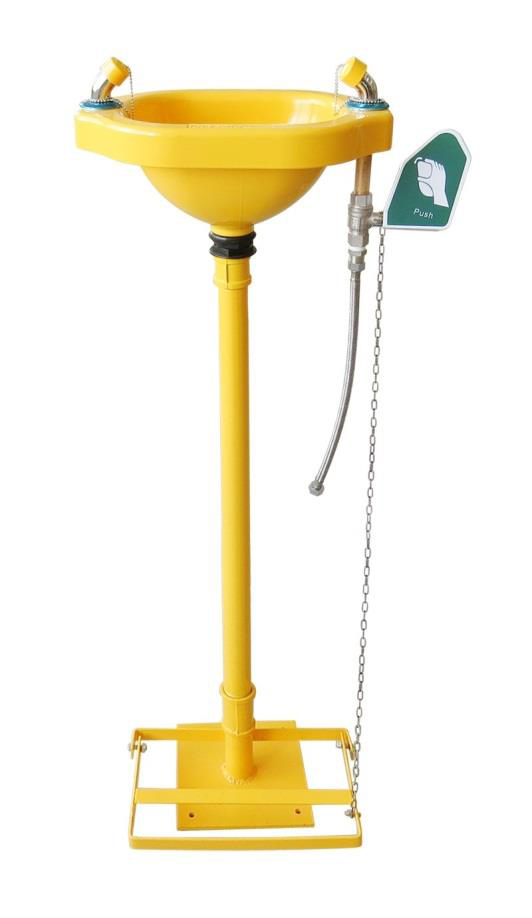
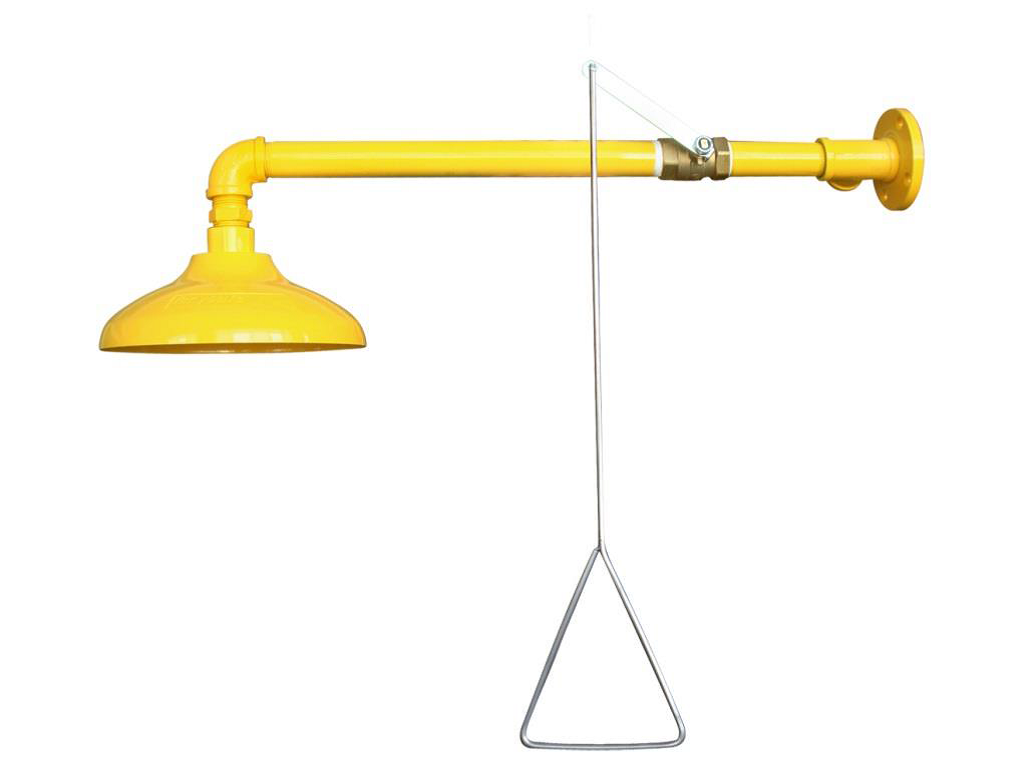
We offer a wide range of Emergency Showers and Eyewash Stations to meet different customer requirements such as the wall mounted eye wash, pedestal eyewash, de-contamination shower, combination shower etc. All products are certified by the European Directive CE EN15154-1 & 2, 89/686/EEC (DIN 12899), ANSI Z358.1 & AS 4775 certificates to certify in good quality & performance.

These products are widely applied in the chemical process industry, mining & oil industry, paper mills, construction, laboratories, pharmaceuticals processing, public utilities and hard working condition environment.

What type of equipment should you install?

Emergency showers are designed to flush the user’s head and body. They should not be used to flush the user’s eyes because the high rate or pressure of water flow could damage the eyes in some instances.

Eyewash stations are designed to flush the eye and face area only. There are combination units available that contain both features: a shower and an eyewash.

The need for emergency showers or eyewash stations is based on the properties of the chemicals that workers use and the tasks that they do in the workplace.

A job hazard analysis can provide an evaluation of the potential hazards of the job and the work areas. The selection of protection — emergency shower, eyewash or both — should match the hazard.

In some jobs or work areas, the effect of a hazard may be limited to the worker’s face and eyes. Therefore, an eyewash station may be the appropriate device for worker protection. In other situations the worker may risk part or full body contact with a chemical. In these areas, an emergency shower may be more appropriate.

A combination unit has the ability to flush any part of the body or all of the body. It is the most protective device and should be used wherever possible. This unit is also appropriate in work areas where detailed information about the hazards is lacking, or where complex, hazardous operations involve many chemicals with different properties. A combination unit is useful in situations where there are difficulties handling a worker who may not be able to follow directions because of intense pain or shock from an injury.

You can view our safety shower and eyewash stations (here).


Posted on

The Risk of Fire & Explosion

(Acknowledgement – Andrew Lawrence of Empteezy)


Flammable substances such as solvents and fuels are present in many workplaces, but they can cause devastating fires and explosions if handled incorrectly. This can be avoided by properly assessing the risks and adopting precautions such as safe storage.

 Explosion


The risk of fire and explosion from substances such as chemicals, solvents, fuels and fuel gases is ever present in many working environments. The problem occurs because as well as being highly flammable, if many of these substances are exposed to the air they evaporate, causing dangerous vapors to accumulate. This in turn poses a serious risk of ignition or explosion.


It goes without saying that this scenario can lead to major loss of life and serious injury, as well as significant damage to property. As a result, employers working with and handling dangerous substances such as chemicals, fuels and gases have a legal obligation to tackle the associated fire

and explosion risks. This means preventing the release of dangerous substances; preventing or controlling sources of ignition; ensuring that products are stored correctly; and establishing  appropriate procedures for the delivery, handling and use of these substances.


Employers should firstly attempt to completely eliminate the fire and explosion risks from dangerous substances – for example, by using a non-hazardous substance. But if this proves impractical, measures must be taken to control the risks and mitigate the effects of any fire or explosion. Control measures must be applied in a priority order, starting with reducing the quantity of the dangerous substance to a minimum. Mitigation measures will include reducing the number of employees exposed to the hazard and providing staff with suitable personal protective equipment.


Safe storage

One area that employers should pay close attention to when preventing fires and explosions is the safe storage of flammable liquids in process areas, workrooms, laboratories and similar working areas. Regulations (and best practice) apply to the indoor storage of all flammable substances – employers must eliminate or control the risk, reduce the quantity of substances stored on site and mitigate the effect of any foreseeable fire or explosion. Three elements must be present for a fire to start; heat, oxygen and fuel, and if one of these can be removed, the risk of a fire will also be removed. Heat can be any ignition source which generates heat, such as a mechanical spark, static electricity, or a naked flame from welding equipment. Oxygen is of course present in the air, while fuel can be any flammable or combustible liquid or vapour. Some of the general principles to follow when storing or working with flammable or explosive substances at work are explained below.


Flammable liquids

Flammable liquids must be stored in a separate area of the workplace in purpose made bins or cupboards that comply with South African regulations. During dispensing, there must be good ventilation and sources of ignition – such as a spark from a tool or electrical component – must be removed. Containers should also be kept closed when not in use, and whenever possible safety containers with self-closing lids and flame arresters should be used. It is also a good idea to have a suitable spill kit on hand to capture any leaks which could pose a safety or pollution risk.


Flammable dusts

If flammable or explosive dusts are present steps must be taken to remove any sources of ignition – for example, by ensuring that no naked flames are present. Work areas should also be regularly cleaned to keep them dust-free.


Flammable solids

Many types of packaging material such as plastic foam, polyester wadding and textiles give off dense black smoke when they burn, so they should not be stored close to heaters or electrical equipment which could act as an ignition source.


Flammable gases

Gases are often stored at very high pressure and any uncontrolled release can fill a large area quickly. This is particularly the case with liquefied gases such as LPG. As a result, gas cylinders should be stored in a designated area in purpose built stores. The cylinders should also be restrained and you should try to protect the valves from potential damage caused by impacts.


Oxygen

Materials that ordinarily burn slowly, will burn vigorously in an oxygen rich atmosphere, so oxygen cylinders must also be stored in a secure and controlled manner. In addition, oxygen must never be used as a substitute for compressed air, or to sweeten the air in a working area or confined space. Furthermore, grease or oil must not be used on equipment containing oxygen as they can self-ignite.


Reactive chemicals

Some chemical products incorporating organic peroxides can explode if not stored and handled correctly and certain chemical substances can react with incompatible materials or contaminants, causing an explosion. For example, oxidising chemicals can cause flammable materials to ignite and some substances such as sodium react violently when they come into contact with water. In addition, chemical products should be stored and used at the recommended temperatures to prevent dangerous decomposition or unwanted reactions. Information on storage and handling temperatures can be found in the substance’s material safety data sheet (MSDS)or by contacting the manufacturer.


Using flammable liquids

If flammable liquids are used in a work process, it is likely that a limited quantity will have to be stored and readily available inside the workplace. In assessing the risks from flammable substances, employers will need to justify the requirement to store any particular quantity of flammable liquid within the work room or working area. However, the guiding principle is that only the minimum quantity needed for frequently occurring activities or an amount required for use during half a day or one shift should be present in the work room. The actual quantities allowed inside the work area or building will depend on the work activity and also the arrangements in place for controlling the fire risks. When not in use, containers used for storing flammable liquids needed for ongoing work should be kept closed and placed in suitable fire-resistant cabinets or bins which are also designed to retain spills. The cabinets should be located in designated areas that do not interfere with any escape route from the working area. Ideally, this will be away from the processing area. Flammable liquids should also be stored separately from other dangerous substances that pose a risk of fire or which could compromise the integrity of the container. For example, substances with oxidising and corrosive properties should not be stored together.


Maximum storage quantities

The local Fire by-laws dictate the maximum quantities of flammable substances that should be stored within your premises without a flammable substance certificate. It is recommended that you liaise with your local fire department for the maximum allowable quantities applicable to your area.   Typically, these limits are no more than 40 litres of class I (flash point of < 37 deg C) and 200 litres of class II and III liquids (flash point > 37 deg C) .


Outdoor storage

If dangerous substances such as oils and chemicals are stored externally, employers also need to ensure they do not pose a risk of polluting nearby drains or watercourses. Companies can be prosecuted for such incidents even if the problem is caused by vandals. Employers must therefore think about the amounts of products that need to be stored; the types of containers they are held in (for example, 205 litre drums or 1,000 litre intermediate bulk containers); and the need for spill pallets or standalone stores with built-in sumps to capture spills and leaks. The bund of any storage unit or a spill pallet must be able to contain at least 110% of the volume of the largest container or 25% of the total volume stored, whichever is greater. They must also be made of a material compatible with the chemical being stored. Storage areas should also be located in suitable areas, for example, away from drains and staff should also be trained on how to deal with spills. Spill kits and absorbent materials should be present on site and a pollution incident response procedure should be drawn up and followed at all times. It is always better to try to keep any spill of hazardous substances on the surface, so spill kits should be located next to chemical and oil storage areas and sealing products should be positioned next to the site drains. An inventory of all the chemicals on site should be drawn up and should be kept in a location where it can be easily accessed by spill responders or outside agencies, such as the fire service. The location of spill containment equipment should also be marked on a site plan, and this too should be readily available to staff or emergency responders.