
Flammable Cabinet Requirements in South Africa
Storing flammable liquids in the workplace comes with serious responsibility. Whether you are dealing with petrol, solvents, diesel, etc., incorrect storage can lead to fires, injuries, and non-compliance with South African legislation.
One of the most common solutions is a flammable storage cabinet. However, many businesses are unsure what is actually required for compliance and when a cabinet is enough.
Below we break down flammable cabinet requirements in South Africa in simple, practical terms.
What the Law Says About Flammable Storage
Flammable liquid storage in South Africa is governed under the Occupational Health and Safety Act, specifically the General Safety Regulations (GSR 4).
In simple terms, the law requires that flammable liquids must be stored in a way that prevents fire and explosion hazards. This typically means using a fire-resistant enclosure such as a compliant cabinet, store, or dedicated area.
The key takeaway is that storage must be designed to reduce risk, not just contain product.
When Is a Flammable Cabinet Required
A flammable cabinet is generally used when storing small to moderate quantities of flammable liquids, especially indoors or close to work areas.
Typical scenarios include:
- Workshops storing solvents or thinners
- Maintenance areas with fuels or cleaning chemicals
- Production environments using flammable liquids in daily operations
In these situations, a cabinet provides a controlled and safer storage solution that reduces fire risk and improves overall compliance.
Key Requirements for a Compliant Flammable Cabinet
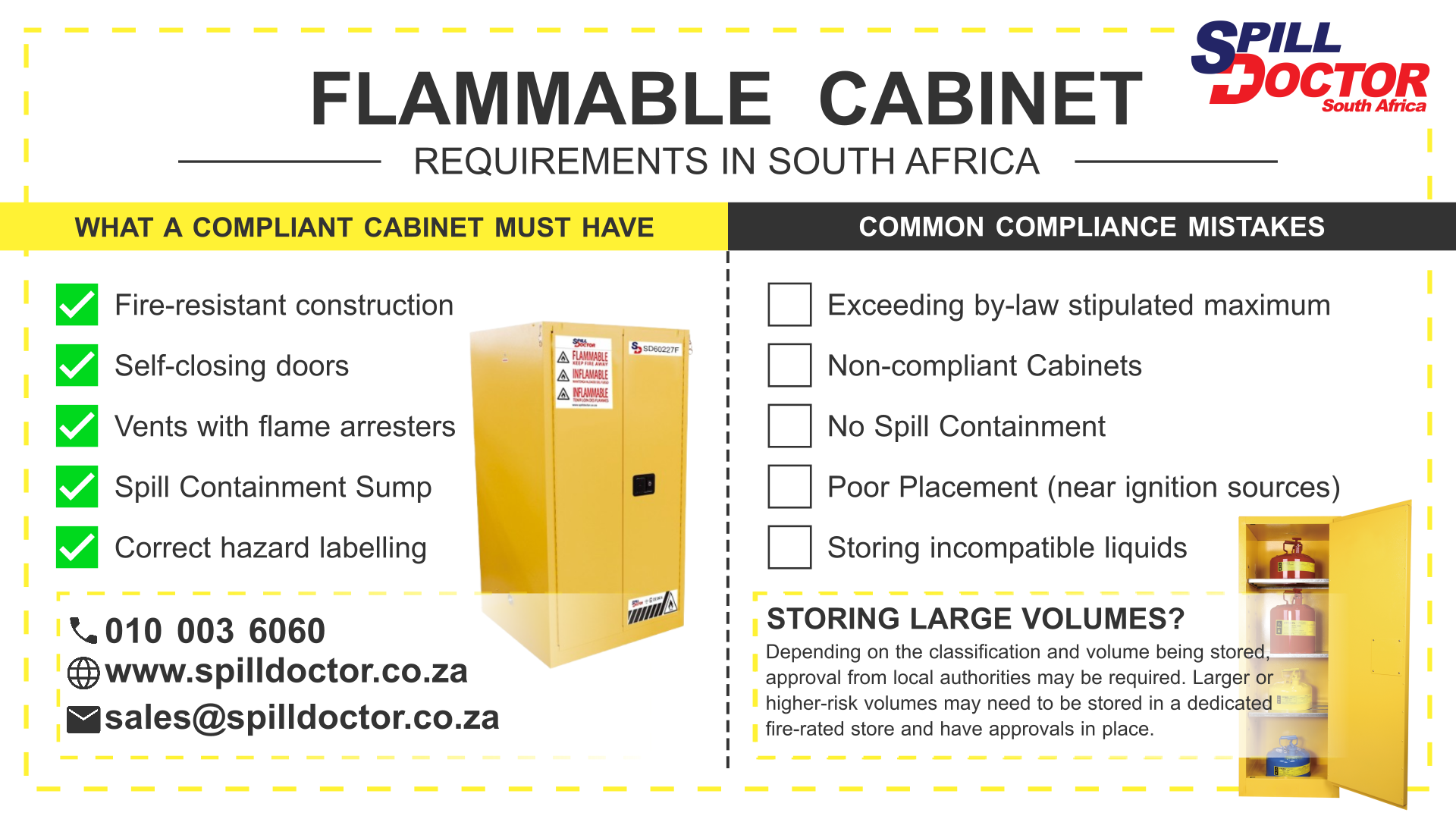
A proper flammable cabinet is not just a metal cupboard. To meet compliance expectations as per SANS-54470-1, it should include the following:
Fire-resistant construction
Cabinets must be designed to withstand fire exposure and limit heat transfer to the contents inside.
Self-closing doors and secure locking
Doors should close automatically to contain fire and prevent vapour escape.
Ventilation provisions
Built-in vents help prevent the buildup of flammable vapours inside the cabinet.
Integrated spill containment sump
A sump at the base of the cabinet captures leaks and prevents spills from spreading.
Correct labelling
Clear hazard identification is essential so that personnel and emergency responders can identify risks immediately.
These features work together to reduce the likelihood and impact of a fire event.
Capacity Limits and When Cabinets Are Not Enough
This is where most confusion comes in.
A cabinet may physically hold large volumes, but that does not automatically mean it is compliant for all situations and volumes being stored.
For highly flammable liquids such as petrol or acetone, allowable storage quantities are often limited by:
- local municipal by-laws
- fire department requirements
- site-specific risk assessments
As a general guideline, smaller quantities can typically be managed within a cabinet. As volumes increase, especially when storing multiple 210 litre drums, additional approvals or alternative storage solutions such as a 2-hour fire-rated store may be required.
For less volatile liquids such as diesel and oils, higher volumes can often be stored with fewer restrictions, provided proper safety measures are in place. It is important to always check flammable liquid storage by-laws in your local area.
Common Mistakes That Lead to Non-Compliance
Many sites believe they are compliant when they are not. Some of the most common issues include:
- Storing more product than permitted by by-laws
- Using standard cupboards instead of compliant purpose built cabinets
- No spill containment or damaged sumps
- Poor ventilation leading to vapour buildup
- Placing cabinets near ignition sources or high traffic areas
These mistakes increase both safety risk and the likelihood of failing an inspection.
What Inspectors Typically Look For
During a safety audit or inspection, the focus is not only on the cabinet itself but also how it is used.
Inspectors will typically check:
- Whether the cabinet is purpose-built for flammable storage
- The condition of the cabinet, including doors and seals
- Proper labelling and hazard identification
- The quantity and type of liquids stored
- The location of the cabinet within the facility
Even a compliant cabinet can be flagged if it is incorrectly positioned or overloaded.