Posted on

Why Polyethylene Spill Pallets Fail (And What to Look Out For)

why Polyethylene spill pallets fail graphic

Why Polyethylene Spill Pallets Fail (And What to Look Out For)

When it comes to spill containment, many polyethylene spill pallets appear nearly identical at first glance. Similar colour, similar shape, similar advertised capacity. However, in real-world industrial environments, the quality difference between spill pallets can become obvious very quickly.

Poor-quality spill pallets can crack, warp, sag under load, or degrade over time, especially when exposed to chemicals, UV radiation, and constant handling by forklifts or pallet jacks. While a spill pallet may seem like a simple product, its performance plays an important role in environmental protection, workplace safety, and regulatory compliance.

Understanding why spill pallets fail can help businesses make more informed purchasing decisions and avoid costly replacements or containment failures later on.

The Importance of Material Quality

One of the biggest factors affecting the lifespan of a spill pallet is the quality of polyethylene used during manufacturing.

Most higher-quality spill pallets are manufactured using virgin linear low-density polyethylene (LLDPE), which offers consistent structural performance and chemical resistance. Lower-cost alternatives often contain recycled material, which can vary significantly depending on the source and manufacturing process.

The challenge with recycled polyethylene is consistency. Variations in the material can affect strength, flexibility, and long-term durability. In some cases, unknown contaminants within recycled plastics may also impact chemical compatibility or cause the material to become brittle over time.

In demanding industrial applications, consistency matters.

UV Exposure Can Accelerate Failure

South African conditions can be particularly harsh on outdoor equipment. Constant UV exposure and high temperatures place additional stress on polyethylene products.

Spill pallets manufactured without adequate UV stabilisation may begin degrading faster than expected. Over time, prolonged sun exposure can lead to fading, brittleness, cracking, or weakened structural integrity.

For businesses storing drums or containers outdoors, UV resistance should always be considered when selecting spill containment equipment.

Load Ratings Are Often Misunderstood

Another common issue involves load ratings.

Many spill pallets advertise impressive load capacities, but there is an important difference between static load ratings and dynamic load ratings.

A static load refers to weight that remains stationary while sitting on the spill pallet. A dynamic load refers to weight being moved, typically using a forklift or pallet jack. During movement, additional stress is placed on the structure due to shifting weight and uneven pressure points.

A spill pallet that performs adequately under static conditions may still flex, deform, or fail when moved incorrectly or overloaded dynamically.

Understanding how the spill pallet will actually be used on-site is critical.

Weak Grating Systems Create Long-Term Problems

The grating system is another area where quality differences become noticeable.

Thin or poorly supported grates may begin flexing under the weight of drums or IBCs, especially when exposed to continuous heavy loading. Over time, this can lead to warping, instability, or cracking.

In industrial environments where spill pallets are used daily, durable grating systems and proper structural reinforcement are essential for long-term reliability.

Removable grates are also important, as they allow for easier cleaning and maintenance of the sump area.

Chemical Compatibility Should Never Be Assumed

Not all polyethylene spill pallets are suitable for all chemicals.

Different chemicals interact with plastics differently, particularly aggressive solvents, oxidisers, or corrosive substances. Assuming compatibility without verification can lead to premature degradation or containment failure.

You should always confirm chemical compatibility when selecting spill containment equipment, particularly when storing hazardous liquids for extended periods.

What to Look For in a Quality Spill Pallet

When selecting a polyethylene spill pallet, you should look beyond appearance and pricing alone.

Key factors to consider include:

Virgin LLDPE construction
UV-resistant materials for outdoor use
Properly tested load ratings
Durable grating systems
Adequate sump capacity
Forklift compatibility
Chemical compatibility guidance

A spill pallet should not only contain leaks when new, but continue performing reliably for years in demanding industrial conditions.

Spill containment is not simply about placing drums or IBCs on a plastic base. A properly designed spill pallet helps reduce environmental risk, improve workplace safety, and support compliance with secondary containment requirements.

While lower-cost products may appear similar initially, long-term durability and performance often depend on the quality of materials and manufacturing standards behind the product.

Choosing the right spill pallet from the beginning can help prevent failures, reduce replacement costs, and provide greater confidence in day-to-day operations.
Posted on

Flammable cabinet Requirements in South Africa

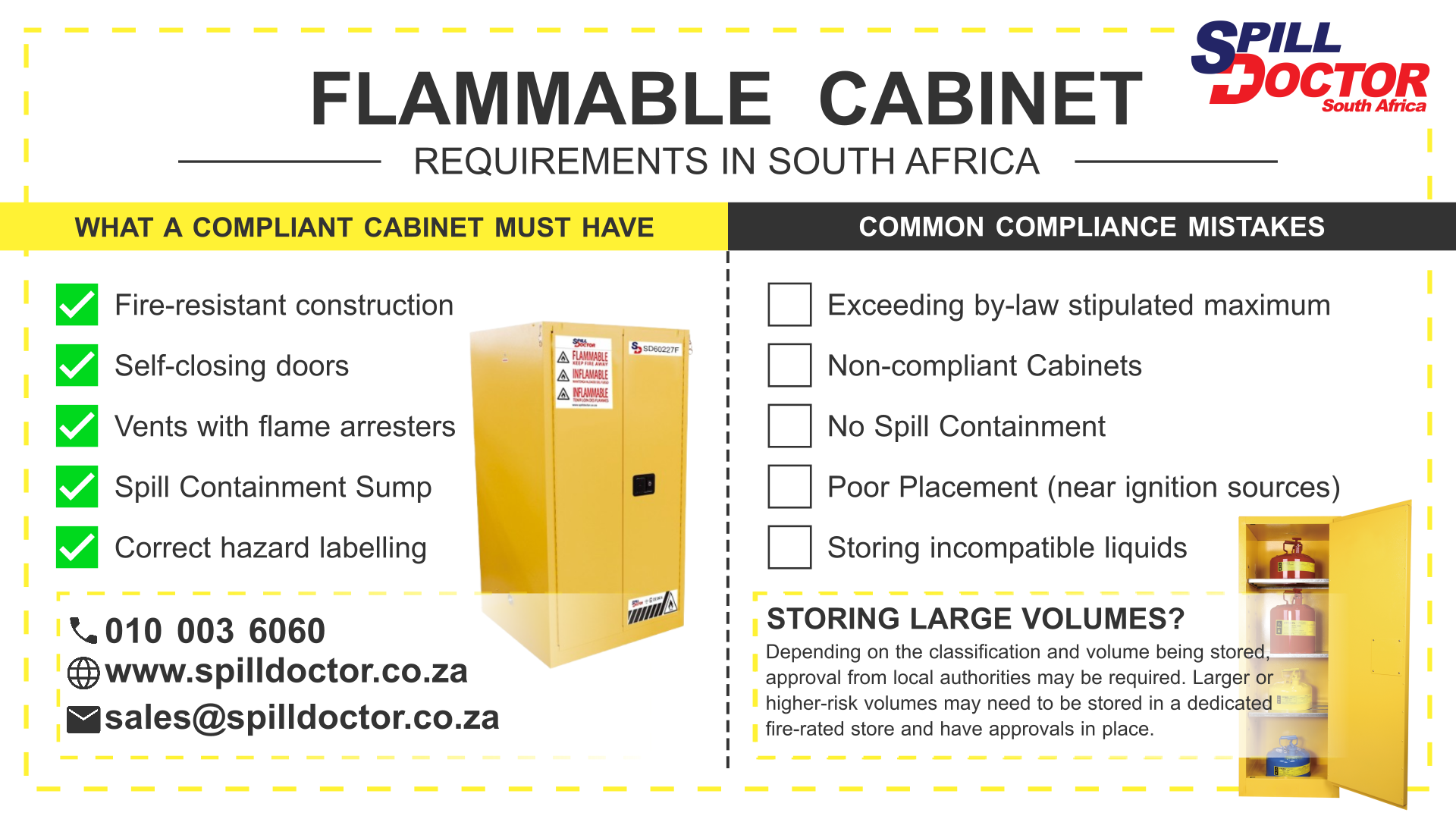
Flammable Cabinet Requirements Checklist graphic

Flammable Cabinet Requirements in South Africa 

Storing flammable liquids in the workplace comes with serious responsibility. Whether you are dealing with petrol, solvents, diesel, etc., incorrect storage can lead to fires, injuries, and non-compliance with South African legislation.

One of the most common solutions is a flammable storage cabinet. However, many businesses are unsure what is actually required for compliance and when a cabinet is enough.

Below we break down flammable cabinet requirements in South Africa in simple, practical terms.

What the Law Says About Flammable Storage

Flammable liquid storage in South Africa is governed under the Occupational Health and Safety Act, specifically the General Safety Regulations (GSR 4).

In simple terms, the law requires that flammable liquids must be stored in a way that prevents fire and explosion hazards. This typically means using a fire-resistant enclosure such as a compliant cabinet, store, or dedicated area.

The key takeaway is that storage must be designed to reduce risk, not just contain product.

When Is a Flammable Cabinet Required

A flammable cabinet is generally used when storing small to moderate quantities of flammable liquids, especially indoors or close to work areas.

Typical scenarios include:

  • Workshops storing solvents or thinners
  • Maintenance areas with fuels or cleaning chemicals
  • Production environments using flammable liquids in daily operations

In these situations, a cabinet provides a controlled and safer storage solution that reduces fire risk and improves overall compliance.

Key Requirements for a Compliant Flammable Cabinet

A proper flammable cabinet is not just a metal cupboard. To meet compliance expectations as per SANS-54470-1, it should include the following:

Fire-resistant construction
Cabinets must be designed to withstand fire exposure and limit heat transfer to the contents inside.

Self-closing doors and secure locking
Doors should close automatically to contain fire and prevent vapour escape.

Ventilation provisions
Built-in vents help prevent the buildup of flammable vapours inside the cabinet.

Integrated spill containment sump
A sump at the base of the cabinet captures leaks and prevents spills from spreading.

Correct labelling
Clear hazard identification is essential so that personnel and emergency responders can identify risks immediately.

These features work together to reduce the likelihood and impact of a fire event.

Capacity Limits and When Cabinets Are Not Enough

This is where most confusion comes in.

A cabinet may physically hold large volumes, but that does not automatically mean it is compliant for all situations and volumes being stored.

For highly flammable liquids such as petrol or acetone, allowable storage quantities are often limited by:

  • local municipal by-laws
  • fire department requirements
  • site-specific risk assessments

As a general guideline, smaller quantities can typically be managed within a cabinet. As volumes increase, especially when storing multiple 210 litre drums, additional approvals or alternative storage solutions such as a 2-hour fire-rated store may be required.

For less volatile liquids such as diesel and oils, higher volumes can often be stored with fewer restrictions, provided proper safety measures are in place. It is important to always check flammable liquid storage by-laws in your local area.

Common Mistakes That Lead to Non-Compliance

Many sites believe they are compliant when they are not. Some of the most common issues include:

  • Storing more product than permitted by by-laws
  • Using standard cupboards instead of compliant purpose built cabinets
  • No spill containment or damaged sumps
  • Poor ventilation leading to vapour buildup
  • Placing cabinets near ignition sources or high traffic areas

These mistakes increase both safety risk and the likelihood of failing an inspection.

What Inspectors Typically Look For

During a safety audit or inspection, the focus is not only on the cabinet itself but also how it is used.

Inspectors will typically check:

  • Whether the cabinet is purpose-built for flammable storage
  • The condition of the cabinet, including doors and seals
  • Proper labelling and hazard identification
  • The quantity and type of liquids stored
  • The location of the cabinet within the facility

Even a compliant cabinet can be flagged if it is incorrectly positioned or overloaded.

Posted on

Can Different Chemicals Be Stored In The Same Cabinet?

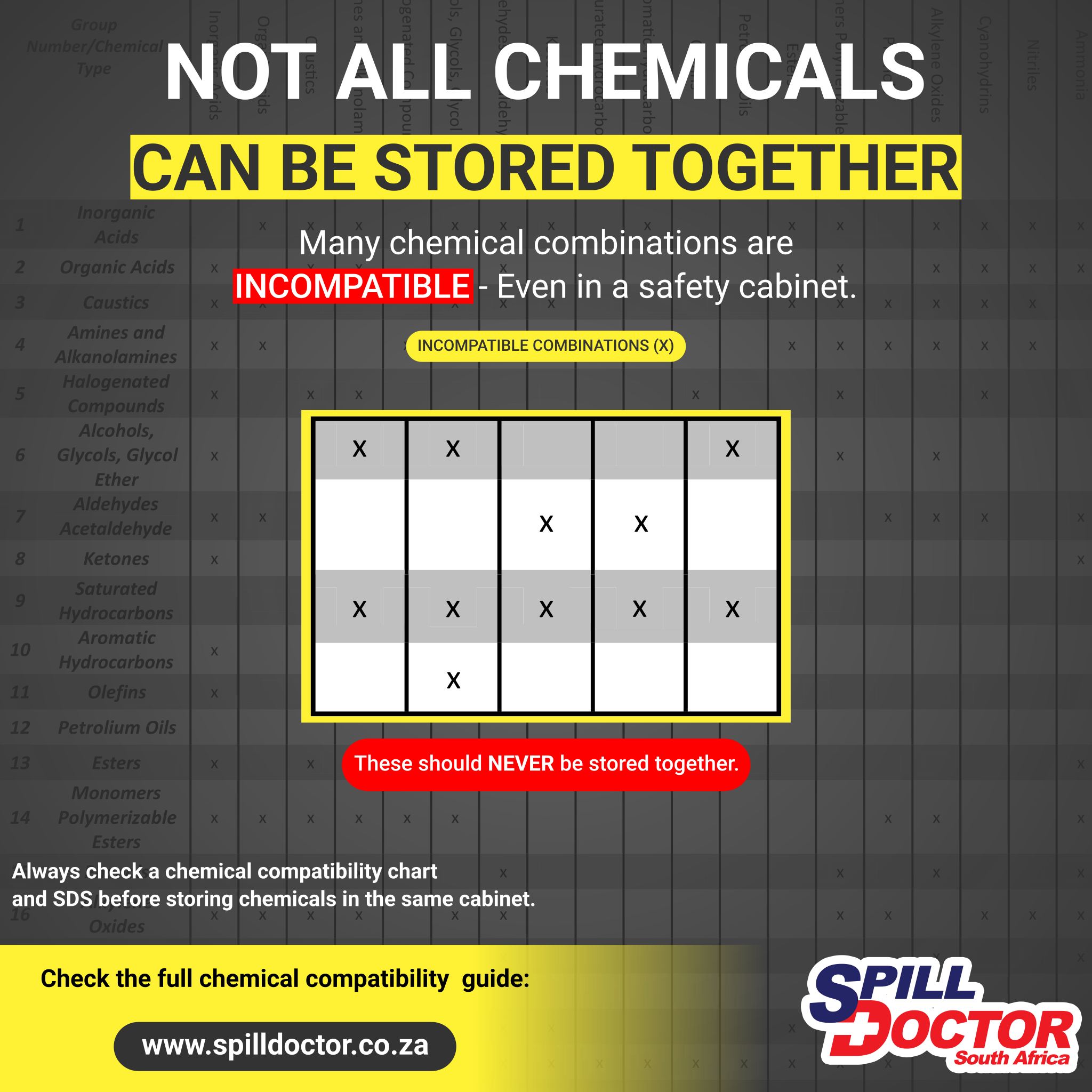
Can Different chemicals be stored in the same cabinet.

Can Different Chemicals Be Stored in the Same Cabinet?

Yes and no. Storing different chemicals in the same cabinet is a common practice in many facilities, but it must be done with caution.

Not all chemicals are compatible. Mixing incompatible substances in the same cabinet, even in sealed containers, can create serious risks if leaks, vapour release, or container damage occurs. In worst-case scenarios, incompatible chemicals can react, leading to fires, toxic gas release, or explosions.

As a general rule, chemicals should be stored based on their hazard class, not convenience.

For example:

Flammable liquids should be stored in flammable safety cabinets
Corrosive substances should be stored in corrosion-resistant cabinets
Oxidisers and acids should be segregated from organics and flammables

Incompatible chemicals should not be stored together unless proper segregation is in place. While most cabinets have physical segregation such as shelving, often they are not properly segregated and share the same air space and sump.

Chemical compatibility charts are a useful tool for identifying which substances can safely be stored together. These charts group chemicals based on how they react with one another and help prevent dangerous combinations.

It’s also important to consider:

Spill containment within the cabinet – does it have a built in sump? Can the substances mix safely?
Ventilation requirements – what do the safety datasheets recommend?
Proper labelling and identification

In many cases, the safest approach is to separate chemicals into dedicated cabinets rather than risk incompatibility.

Proper chemical storage is not just about compliance – it’s about preventing incidents before they happen.

View our chemical compatibility chart here: https://www.spilldoctor.co.za/wp-content/uploads/2015/08/Spill-Doctor-Chemical-Compatibility-Guide.pdf

And our range of chemical cabinets here: https://www.spilldoctor.co.za/product-category/safety-storage-cabinets/chemical-safety-cabinets/

Posted on

Spill Kit Replenishment (Refill Your Kit Without Replacing)

Replen spill kits graphic

Spill Kit Replenishment (Refill Your Kit Without Replacing)

When a spill kit is used on site, many businesses assume the entire unit needs to be replaced.

In reality, most of the time only the absorbent contents need replenishing – not the wheelie bin, shovel, or broom.

If you’ve recently responded to a spill, here’s what you should know about properly refilling and restocking your spill kit.

What Does It Mean to Refill a Spill Kit?

To refill a spill kit simply means replacing the used consumable contents after a spill response.

This usually includes:

  • Absorbent pads
  • Absorbent socks or booms
  • Disposal bags
  • PPE (gloves, etc.)

The outer container and tools are typically reusable unless damaged.

Spill kit replenishment packs are designed specifically for this purpose – allowing you to restore the kit to its original capacity.

When Should You Replenish Instead of Replace?

You should refill a spill kit if:

  • Only the absorbents were used
  • The bin and tools are still in good condition
  • The kit type is still suitable for the intended spill
  • The original capacity is being restored fully

You may need to replace the entire kit if:

  • The container is cracked or damaged
  • The contents were contaminated
  • The hazard classification has changed
  • You are upgrading capacity

Why Refilling a Spill Kit Is More Cost-Effective

  • Absorbents are consumables.
  • The wheelie bin, shovel and broom are not.
  • Replacing a full unit every time a spill occurs means paying repeatedly for equipment you already have.

A spill kit refill pack allows you to:

  • Reduce replacement costs
  • Standardise stock across multiple kits
  • Maintain compliance without unnecessary capital spend

For sites with multiple spill kits, this becomes a significant cost saving over time.

Compliance Risk of Half-Empty Spill Kits

One of the biggest issues we see on sites is partially restocked spill kits.

After a spill:

  • A few pads are added back
  • Some items are forgotten
  • Capacity no longer matches the label

This creates risk during inspections and can lead to inadequate response during the next spill.

Proper spill kit replenishment ensures the kit is restored to its rated absorbency capacity.

Spill Kit Replenishment vs Spill Kit Replacement:

If the “non-consumables” are in good condition – refill.

If the non-consumables” are not in good condition – replace.

It’s that simple.

Most businesses only need replenishment packs after routine spill incidents.

If your spill kit has been used in the last 6-12 months, check:

  • Is it fully restocked?
  • Does the absorbent volume match the rated capacity?
  • Is the kit still appropriate for the substance if spilled?

If not, a spill kit replenishment may be the most efficient solution.

Spill Doctor supplies replenishment packs for oil and chemical spill kits to help businesses stay compliant without replacing entire units unnecessarily.

You can view our range of replenishment kits here: https://www.spilldoctor.co.za/product-category/spill-kits/

Posted on

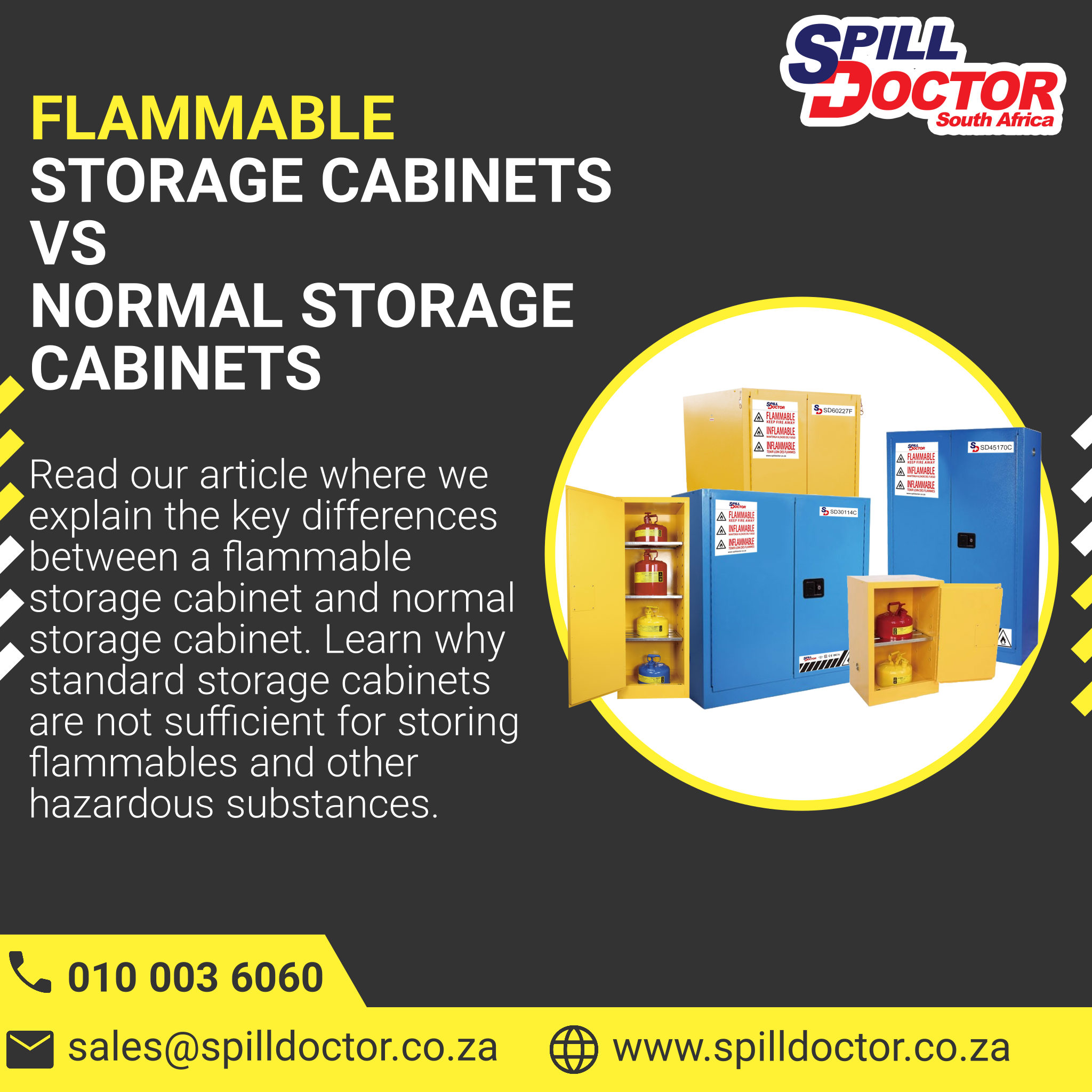
Difference Between Flammable Cabinets and Normal Storage Cabinets

Flammable cabinets vs normal cabinets graphic

Difference Between a Flammable Cabinet and a Normal Storage Cabinet

Many workplaces store paints, solvents, thinners, fuels, or cleaning chemicals in standard metal cupboards. But when it comes to storing flammable liquids, a normal storage cabinet is not the same as a flammable safety cabinet. Understanding the difference is critical for fire safety, legal compliance, and insurance protection.

Can You Store Flammable Liquids in a Normal Cabinet?

Short answer: No.
A standard metal storage cabinet is designed for organisation — not fire protection. It does not slow heat transfer during a fire, contain flammable vapours, provide spill containment, or meet hazardous storage requirements. In the event of a fire, a normal cabinet can rapidly heat up, causing stored liquids to ignite and intensify the fire.

What Makes a Flammable Cabinet Different?

A flammable cabinet is specifically engineered to reduce fire risk and contain spills.

Key differences include:

1. Double-Wall Construction
Flammable cabinets have dual steel walls with an insulating air gap that slows heat transfer during a fire.

Normal cabinets typically have single-wall construction.

2. Built-In Spill Sump
Flammable cabinets include an integrated liquid-tight sump which is 10% of the cabinets total storage volume as per SANS54470-1.

Normal cabinets do not provide secondary containment.

3. Self-Closing Doors
Many flammable cabinets feature automatic self-closing doors to prevent accidental exposure and seal the cabinet in the event of an emergency.

Normal cabinets rely entirely on manual closing.

4. Fire Resistance Performance
Flammable cabinets are tested to withstand fire exposure for a specified period (depending on model).

Normal cabinets are not fire-rated.

5. Ventilation Design
Flammable cabinets include ventilation ports, with flame arrestors to reduce ignition risks.

Standard cabinets do not account for vapour management.

Why This Difference Matters for Compliance:

In South Africa, hazardous chemical storage is governed by safety standards and the Occupational Health and Safety framework.

Using a normal storage cupboard for flammable liquids can result in:

Fire code non-compliance

Insurance claim rejection

Increased fire risk

Environmental liability

Personal accountability for safety officers and company owners

A flammable cabinet is not simply “stronger metal.”
It is a proactive safety measure.

When Is a Flammable Cabinet Required?

A flammable cabinet is typically required when:

Storing solvents, fuels, thinners, or alcohol-based chemicals

Quantities exceed minor-use thresholds (check local municipal bylaws)

Storage is inside a building

Ignition sources are present nearby

Risk assessments identify fire exposure potential

If in doubt, a formal site risk assessment should guide cabinet selection.

Final Thoughts

A normal cabinet organises.
A flammable cabinet protects.

The cost difference between the two is minor compared to the cost of a fire incident, failed audit, or rejected insurance claim.

If your facility stores flammable liquids, choosing the correct cabinet is not optional — it is part of responsible hazardous chemical management.

You can view our range of cabinets here.

If you are still unsure which cabinet will best suit your needs, contact us here.