Posted on

Safeguarding Workplaces and the Environment Using Spill Pallets

Safeguarding Workplaces and the Environment Using Spill Pallets

Spill pallets play a crucial role in ensuring the safety of workplaces that handle hazardous liquids. They provide a secure containment system that prevents leaks and spills from causing harm to both employees and the environment. In this article, we will explore the purpose of spill pallets, how they work, the benefits they offer, their role in environmental protection, relevant laws and regulations, and the importance of selecting the right materials for spill pallet construction.

Purpose of Spill Pallets:

Spill pallets serve as a specialized storage solution for drums or containers containing hazardous liquids. Their primary purpose is to prevent leaks and spills from contaminating the workplace, soil, and water sources. By providing a secure platform with integrated containment basins, spill pallets ensure that any potential spills are captured and contained within the pallet, limiting their impact.


How Spill Pallets Work:

Spill pallets are designed with a few key features that enable them to effectively prevent and manage spills. They are constructed with a durable polyethylene, which is a highly resistant material. This ensures that the pallet can withstand contact with a wide range of hazardous substances without degrading or compromising its structural integrity.

Spill pallets also feature an elevated platform where drums or intermediate bulk containers are placed. This elevation helps in inspecting the containers for leaks or damage, and it also prevents direct contact with the ground, which could lead to corrosion or contamination. Additionally, spill pallets are equipped with integrated containment basins that can hold 25% of the total volume being stored, allowing for easy cleanup, and reducing the risk of the spill spreading.


Benefits of Using Spill Pallets in the Workplace:

Enhanced Workplace Safety: Spill pallets greatly reduce the risk of slips, trips, and falls caused by liquid spills, protecting employees from potential injuries, and ensuring a safer work environment.

Environmental Protection: By containing spills, spill pallets prevent hazardous substances from seeping into the soil, groundwater, or nearby water sources, minimizing the negative impact on ecosystems.

Regulatory Compliance: Many countries have specific regulations and standards regarding the storage and handling of hazardous materials. Using spill pallets helps organizations comply with these regulations, avoiding penalties and legal issues.

Cost Savings: Properly managing spills through spill pallets can significantly reduce cleanup costs associated with hazardous material spills, minimizing the need for expensive remediation efforts and potential fines.


Spill Pallets and Environmental Protection:

The use of spill pallets plays a vital role in protecting the environment. Spills and leaks from hazardous substances can have severe consequences, contaminating soil, polluting water sources, and endangering wildlife. Spill pallets act as a preventive measure, acting as a barrier to contain spills before they can cause harm. By using spill pallets, companies demonstrate their commitment to responsible environmental stewardship.


Laws and Regulations:

When it comes to handling hazardous substances, laws and regulations are in place to ensure the safety of employees, communities, and the environment.  It is essential to understand the specific requirements of your jurisdiction and industry regarding spill containment, storage, and disposal. Compliance with these regulations often includes the use of spill pallets to mitigate risks associated with handling hazardous liquids.


Choosing the Right Spill Pallet:

Selecting the appropriate spill pallet requires a consideration of factors such as the type and volume of hazardous substances being stored, the frequency of use, and the specific regulations applicable to your industry. When choosing a spill pallet, it is crucial to ensure that it is compatible with the substances you handle. Evaluating the material compatibility and capacity of spill pallets will help determine the most suitable option for your workplace.

Spill pallets are a critical component of workplace safety and environmental protection. They offer a secure containment system that prevents leaks and spills from hazardous liquids, safeguarding employees, minimizing the risk of environmental contamination, and ensuring compliance with laws and regulations. By investing in the right spill pallets and adhering to proper usage guidelines, organizations can significantly reduce the potential for accidents, mitigate the impact of spills, and create a safer and more responsible working environment.


Posted on

90 Minute Fire Rated Safety Cabinets

90 Minute Fire Rated Flammable Cabinets

We’re excited to announce the arrival of our new line of 90-minute rated flammable cabinets! Designed for safety and durability, these cabinets offer maximum protection for your flammable liquids.

Key Features Include:
• 90-minute fire rating
• Durable construction
• Various sizes and configurations
• Built-in ventilation system
• Spill containment sump
• Lockable doors

Discover the Benefits of 90-Minute Flammable Cabinets!

Ensure Ultimate Safety: Our 90-minute flammable cabinets provide unparalleled protection, giving you up to 90 minutes to respond in case of fire emergencies.

Durable and Reliable: Built to last, our cabinets are designed with high-quality materials, ensuring long-term durability and reliability.

Versatile Storage Solutions: With various sizes and configurations available, our cabinets cater to your specific storage needs, providing a perfect fit for any workspace.

Added Security: Lockable doors offer an extra layer of security.

Upgrade your storage solutions with TUV-approved 90-minute flammable cabinets today and experience the peace of mind that comes with top-notch fire protection.

Click Here to view our 90-Minute Rated Flammable Cabinet Range

Posted on

The Benefits of using Spill Pallets and Spill Berms in the Workplace

The Benefits of Using Spill Pallets and Spill Berms in the Workplace

Spill berms and spill pallets are essential tools for safely handling and containing hazardous liquids. These products are designed to prevent spills from spreading and causing damage to the environment or harm to people. Using spill berms and spill pallets when working with hazardous liquids has many benefits. Firstly, it helps to prevent spills from spreading and causing damage to the environment, which is an important consideration when working with hazardous materials. Additionally, spill berms and spill pallets make clean-up easier, reducing the amount of time and resources required to clean up a spill. Most Importantly, they offer protection for workers and the surrounding area from the potential dangers of hazardous liquids.

 What is a Spill Berm?

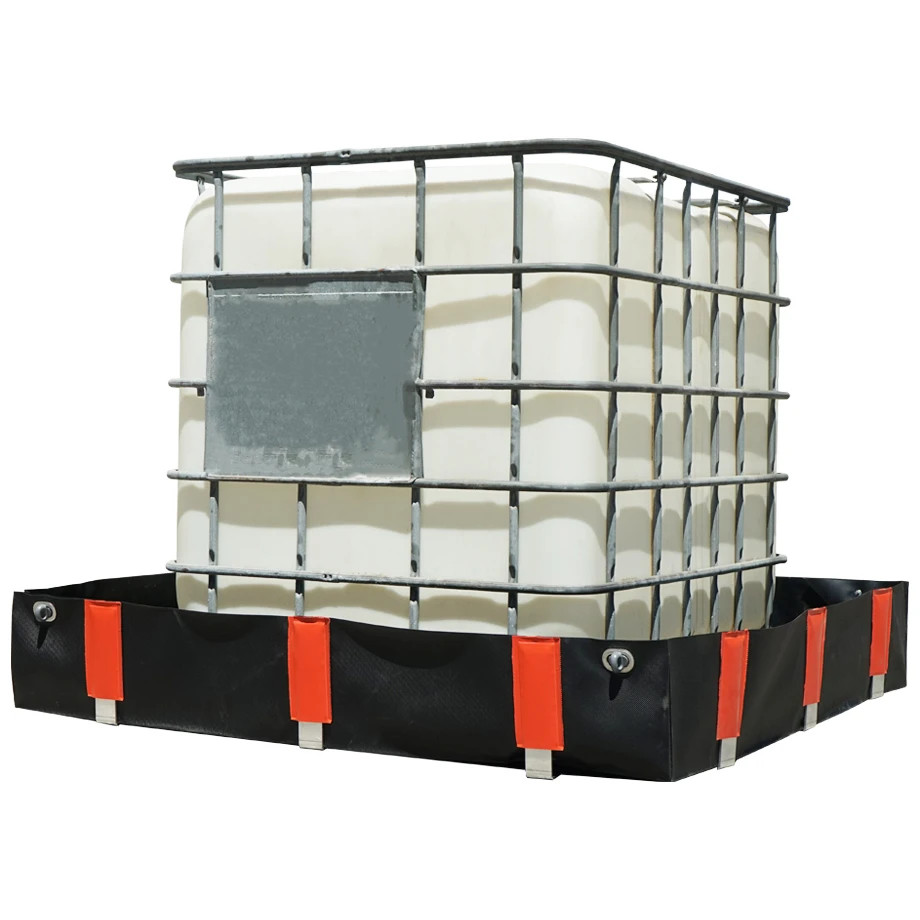
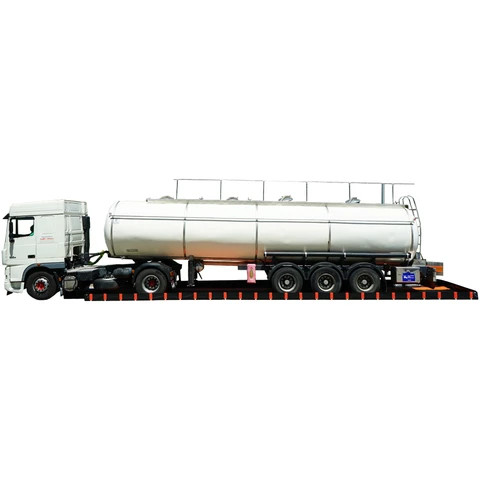
Spill berms are used for areas which require a larger volume of storage. They are made of durable materials such as heavy-duty PVC or polyurethane and can be quickly and easily set up. This helps to contain the spill and prevent it from spreading, reducing the risk of environmental damage and make clean-up easier. Another few benefits of spill berms is that they are portable, can be moved by hand, are also ideal for use in outdoor areas on most surfaces, and thereby preventing spills from reaching nearby waterways or other sensitive areas. Spill berms also have the benefit of collapsible walls, allowing vehicles and heavy plant machinery to drive over the walls when flat, and then erecting the side wall to contain the area around the vehicle. Ideal for concrete mixers, servicing/refuelling of heavy plant machinery, compressor and generator spills as well as water overflow.

 What is a Spill Pallet?

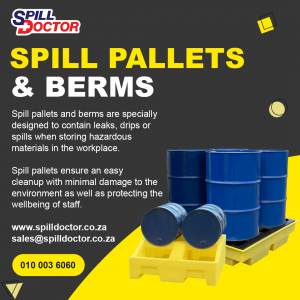
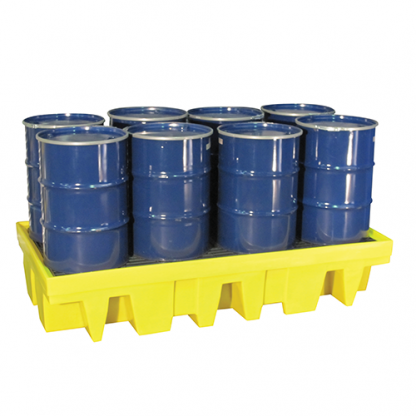
Spill pallets, on the other hand, are designed to be used as a base for containers of hazardous liquids. They are made of 100% Polyethylene and are designed to contain spills and leaks from drums and or IBC flow bins, preventing the spread of spills and protecting the environment while simplifying clean-up are key benefits of using spill pallets. Spill pallets are also a great option for indoor use, as they are designed to be placed on a solid surface such as a concrete floor. 

The Benefits/features : Bund regulation compliant, removable grids and fork pockets for easy movement.

Should You Choose a Spill Pallet or a Spill Berm?

It depends on the specific circumstances of your storage and handling of hazardous liquids. Both spill berms and spill pallets are designed to contain spills and leaks and prevent them from spreading, but they are used in different ways.

Spill berms are typically used when hazardous liquids are being stored or handled in an outdoor area, such as on a construction site or at a facility that stores large quantities of hazardous liquids. This helps to contain the spill and prevent it from spreading, reducing the risk of environmental damage and making clean-up easier.

Spill pallets, on the other hand, are typically used when hazardous liquids are being stored or handled indoors, such as in a warehouse or manufacturing facility. They are placed under containers of hazardous liquids, such as drums or totes, to catch any spills or leaks that may occur.

In general, both spill berms and spill pallets are useful tools to have on hand when working with hazardous liquids. However, whether you need a spill berm, or a spill pallet will depend on the specific circumstances of your storage and handling of hazardous liquids.


If you have any questions about whether you need a spill berm or a spill pallet, do not hesitate to reach out to us via email at sales@spilldoctor.co.za or by telephone at 010 003 6060 for assistance.

In summary, the use of spill berms and spill pallets is crucial in ensuring the safe handling and containment of hazardous liquids. They assist in containing spills and preventing them from causing harm to the environment and making the clean-up process more manageable. Additionally, they provide protection for workers and the surrounding area from the potential harm caused by hazardous liquids. It is crucial for companies handling hazardous materials to invest in these products.

View our fully priced spill pallet and spill berm product range – https://www.spilldoctor.co.za/product-category/spill-containment/

Posted on

The Importance of Emergency Eyewash Stations and Safety Showers

The Importance of Emergency Eyewash Stations & Safety Showers:

What is an Emergency Eyewash Station and Safety Shower?

Chemicals, gases and other hazardous materials can pose a serious risk to staff who manufacture, transfer or work with these substances. Even when personal protective equipment, safety precautions and highly trained staff are used, accidents can still happen and you need the right reactive solutions in place to ensure the safety of your staff and their environment. Fortunately, emergency eyewash stations and safety showers were developed to decontaminate a person in the event of a hazardous spill or fire. 

Emergency eyewash stations and safety showers are permanent or portable stations that are installed in the workplace to decontaminate a person who may have been exposed to chemicals or hazardous materials. These emergency stations are fitted with a medically approved fluid that is used to flush and sterilize contaminates from the eye or exposed body. A sufficient supply of clean water and this fluid is required because flushing times vary depending on the chemical and corrosive they are. Emergency showers and eyewash stations are an emergency first aid response which may be required in your industry according to OSHA (Occupational Safety and Health Act).

Where should emergency eyewash stations and safety showers be installed?

The installation of emergency equipment and medical aid is extremely important. It can be the deciding factor in whether an exposed staff member makes a full recovery or is left with serious injuries and illness. Safety showers and eyewash stations provide immediate decontamination to workers who are exposed to chemicals, acids or any hazardous materials. The first 10 to 15 seconds after exposure is determinative of recovery so the shower and eyewash stations must be in a close and accessible location. 

Emergency shower stations should be positioned in a place where workers can get to them within 10 seconds of walking without having to climb down stairs or a ladder, open or unlock doors or move any objects/obstacles out of their way. A workplace risk assessment may be necessary for determining high-risk zones and how many stations you may need to have installed. Eyewash and shower stations should also be visible to all staff members who may be at risk. Visibility can greatly impact the 10-second rule exposing staff members to serious health risks and injury. If highly corrosive chemicals are being used, the shower or eyewash should be installed next to the workstation. If an eyewash station can’t be installed adjacent to the staff working zone, portable eyewash kits may be required.

If a site safety evaluation determines multiple staff members may be at risk in the event of a spill or exposure to chemicals, an adequate amount of stations should be made available to prevent staff members from having to wait 15 minutes while another is being decontaminated.

How to use an emergency shower or eyewash station?

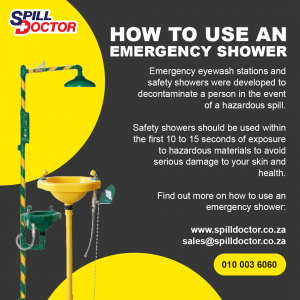
In the event of exposure to corrosive or dangerous chemicals, an emergency shower or eyewash station should be reached within the first 10 to 15 seconds to avoid irreversible skin and health damage. 

Safety Showers – Safety showers are designed to be simple and easy to use to ensure a fast response to emergencies. Most are operated by a pull lever which once drawn will release water at a specific volume and rate for at least 15 minutes. The exposed worker should remove all clothing that may have been contaminated because fabrics can become easily saturated with chemicals, causing more damage to the skin. Staff members should try to keep their eyes closed during the shower – not only could chemicals run down their face and into their eyes, but the pressure of the water may cause more damage if the eyes are open or exposed. If eyes have also been contaminated during the incident, it is required to thoroughly wash their eyes with an eyewash station. Combination showers are best for fast response and should be used when both skin and eyes have been in contact with hazardous materials.

Eyewash Stations – Eyewash stations can be activated using a hand or foot lever. It is important to keep the eyes open and rotate the eyeball for at least 15 minutes to ensure a thorough wash. It is important to have the exposed eye tilted below the other one if only one eye is contaminated to ensure the chemicals don’t run and cause injury to the other eye. Once activated the unit should stay on, so the staff member should use their hands to keep their eyelids open. If their hands have also been exposed, another staff member should assist in keeping their eyes open for the full 15 minutes.

Stations should be tested monthly to ensure they are correctly maintained and operating properly. All staff members should be trained in emergency medical response and reactive drills should be practised to ensure calm and thorough procedures are followed in the event of exposure.

Does your worksite need a safety shower or emergency eyewash station?

Emergency showers and eyewash stations are legally required in work environments where workers and staff members are at risk of being exposed to harmful chemicals, debris, dust or other hazardous materials. It is crucial to provide emergency response procedures like safety showers and eyewash stations to prevent irreversible damage or illness. It is important to note that emergency showers and eyewash stations are a reactive medical response in the event of exposure and not a proactive solution to replace health and safety measures. Proper risk control measures should be practised at all times with safety showers being a last resort if an emergency or accident occurs. 

For more information or to enquire about safety showers and emergency eyewash stations contact us at 010 003 6060 or email us at sales@spilldoctor.co.za.

How to use an emergency shower


Posted on

OHS Act Explained – How to Keep Your Employees Safe

What is the Occupational Health & Safety Act?

The Occupational Health & Safety Act (OHS Act) was designed to ensure safety procedures and systems are implemented and followed in the workplace. The OHS Act protects employees by providing legal protection against a work environment that doesn’t follow the legislation. Without the OHS Act, employers could become lazy when implementing health and safety procedures which could lead to the workplace becoming a dangerous working environment. 

The following will outline why the Occupation Health & Safety Act is important for employers, employees and people working in health and safety industries.

According to the OHS Act, its purpose is to:

  • Protect the health and safety of persons working with equipment, machinery or hazardous materials
  • Protect external persons against hazards to health and safety arising out of or in connection to activities that may take place in a work environment
  • Establish an advisory council for occupational health & safety and provide for matters connected herewith

The sole purpose of the act is to protect employees from factors that may cause risk to their health and safety, as well as external people who may be exposed to dangerous activities and environments generated by a company (customers or people near the workplace). Employers must ensure they adhere to the procedures and requirements stipulated in the OHS Act. Any company with 20 or more employees are required to work in conjunction with a health and safety committee. The health and safety committee are tasked with identifying potential health risks. The Committee usually examine workplace incidents and investigates any complaints made by employees or external persons.

The Act also protects employers by requiring employees to take reasonable care of their health and safety as well as others while at work. It motivates employees to report any incidents or risks that an employer may not know about.

Why is the OHS Act Important?

The Act was put in place to ensure the safety of workers and the environment throughout the country. The act establishes procedures that enforce safe, productive and healthy work environments for every employee. The Act protects all persons involved in a company, from the employer to employees and customers exposed to the workplace.

Employees – 

The Act gives employees the right to a safe work environment and a platform to report any misconduct or negligence in the workplace. Employees who know the conditions of the Act can identify health and safety risks and report them to the relevant authorities. As an employee, it is your responsibility to ensure that safety practices are maintained and followed by yourself and your fellow workers. Not following health and safety requirements could result in a fine or imprisonment if you are found responsible for the damage.

Employer – 

The protection of employees and their families’ welfare should be the number one priority for all employers. Ensuring the health and safety of all workers also improves productivity in the workplace as fewer employees will be injured or fall ill. Should an employee be injured or harmed by an employer not upholding the act, they may face hefty fines or imprisonment if found guilty. Health and safety inspections happen randomly and are there to ensure that employers enforce workplace health and safety measures. Failing to adhere to the Act or not passing the inspection could result in your business temporarily closing until the correct procedures have been enforced.

How Can Employers Ensure a Safe Work Environment:

The Occupational Health & Safety Act requires employers to take responsibility for providing a safe working environment to their employees. Employers must evaluate working areas and conduct risk assessments and inspections to ensure safety measures or being adhered to. The Act also directs employers to provide preventative health and safety measures and reactive solutions in the event of an incident.

Informing Your Employees:

It is vital to explain the Occupational Health & Safety Act to employees to ensure they thoroughly understand the potential risks and hazards that may be present in the workplace. It is the employer’s responsibility to provide knowledge about OHS Act and the security measures in place to their employees. Uninformed employees won’t know what procedures to follow or the role they need to play to ensure a safe work environment for all. Not communicating this with your employees could result in failed inspections, fines, or even harm to workers or the environment.

Report Incidents or Accidents:

It is the employer’s duty to notify the Department of Labour if an employee becomes injured or falls ill. Any high-risk incidents that could be detrimental to employees, people in the area or the environment (such as chemical spills or fires), should also be reported. An investigation will be conducted to investigate the incident and to decide whether the employer and employees had followed the regulations stipulated in the OHS Act. If it is concluded that negligence and not following the proper procedures were the cause of the incident, the employer or employee will be held responsible for their actions. 

How Can Employees Ensure a Safe Work Environment:

Employees are responsible for their own health and safety and should follow the procedures and systems put in place for maximum protection. It is also their responsibility to report malfunctioning systems or other employees who may not be following the regulations. The OHS Act provides four basic rights for employees: 

  • The right to participate in health and safety regulations
  • The right to know the health and safety hazards in the workplace
  • The right to refuse work if health and safety procedures aren’t in place
  • The right to raise OHS concerns with no retaliation

In Conclusion, the Occupational Health and Safety Act was put in place to protect all those who are present in the workplace and it is the responsibility of all to implement and follow the correct procedures for maximum welfare. Not following the regulations provided in the OHS Act could result in damage to an employee’s well-being or the environment around your premises.